
The Science Behind Dietary Soy
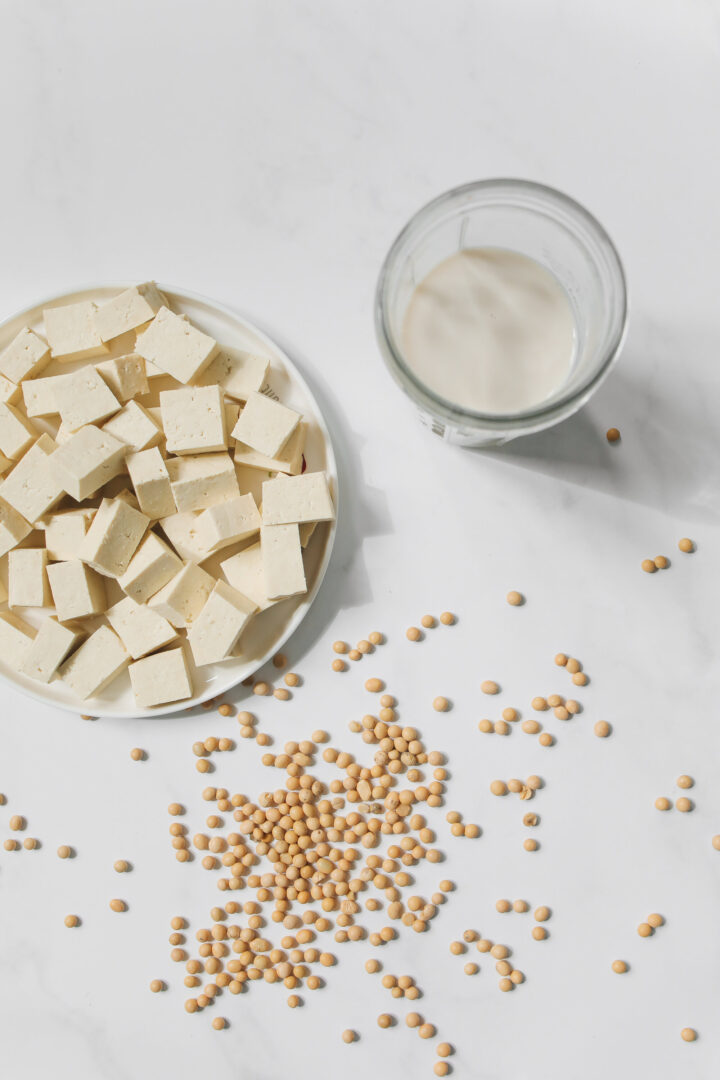
Soy foods tend to get a bad wrap and are frequently and incorrectly associated with breast cancer risk. The real story is that soy foods in whole form are health foods! They contain protein, isoflavones and fiber…all three of which are health promoting.
Let me set the record straight…SOY FOODS DO NOT CONTAIN ESTROGEN. The misconception that they do comes from the isoflavones in soy which are phytoestrogens. So then, what is a phytoestrogen? Phyto- means plant; therefore a phytoestrogen is a plant estrogen…not the same as human estrogen.
Biologically speaking, cells have two estrogen receptor sites- an alpha and a beta. The difference between the two is that the alpha-receptors up-regulate cancer cell growth, whereas the beta-receptors are the good guys and prohibit cancer cell growth. Guess where the isoflavones in soy preferentially bind? The beta-receptors! Given this information, ingesting moderate amounts of soy regularly can actually lower breast cancer risk. Where should soy in the diet come from? Soy foods in their whole food form rather than in a concentrated supplement form. These sources include tofu, tempeh, miso, edamame and soy milk.
Soy foods like tofu, tempeh and edamame can be simple, nourishing additions to everyday meals. If you are looking for an easy way to incorporate soy, recipes like my golden turmeric tofu curry, crispy Thai tofu salad or tofu meal prep bowls are a great place to start.
The Science
Let’s look at the science. In the Shanghai Breast Cancer Survival Study, a large population-based cohort study, 5,042 female breast cancer survivors were followed over 5 years. The study found that the intake of soy foods is significantly associated with decreased risk of death and breast cancer recurrence. It is important to note that this inverse relationship was seen in both estrogen receptor positive and negative breast cancer as well as both tamoxifen users and non-users.1
A follow-up study showed that soy had a protective effect against premenopausal breast cancer. The study used data from the Women’s Shanghai Health Study, which included over 70,000 participants. Researchers found that women who ate the most soy had a 59% lower risk of premenopausal breast cancer, AND that risk was 43% lower when soy was eaten during adolescence.2
In another large cohort study high dietary soy isoflavone intake was associated with lowered risk of mortality from breast cancer. In this study over 6,000 women enrolled in the Breast Cancer Family Registry were examined.3
Health Benefits
Whole soy foods are full of fiber, plant based protein and isoflavones. Soy is an excellent source of protein in a plant based diet. One cup of edamame contains 8 grams of fiber and 17 grams of protein. The isoflavones, a plant nutrient, in soy have been studied and shown to be heart protective, protective against bone fracture in post-menopausal women, have the ability to improve lipid profiles by lowering LDL cholesterol, and to be protective against hormone-associated cancers (breast, endometrial, prostate).5
Whole Soy Foods vs. Supplements
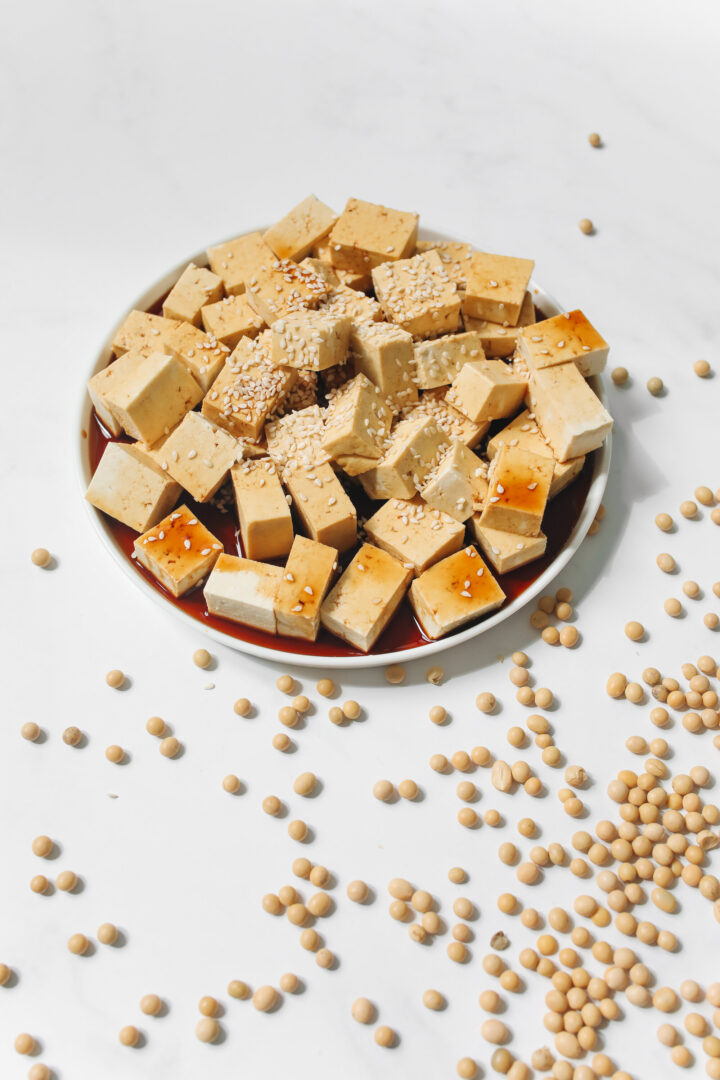
It is important to reiterate that soy in whole food form confers benefits while soy in pill or soy isoflavone powder is not desirable. Among whole food sources are tofu, tempeh, miso, soy milk and edamame.
The Real Estrogen Risk
Estrogens in our food supply and environment pose excess estrogen risk. Animal products, i.e. meat, eggs, dairy, contain estrogen and other sex hormones. These hormones are both endogenous (naturally occurring mammalian hormones) and exogenous from the administration of sex hormones to cattle, for example, to accelerate growth. The residue of estrogens and sex hormones on meat seemingly are not considered harmful by most consumers, yet some of those same consumers question the safety of tofu…this is a bit of a conundrum. Further, consider the concentration of estrogens, which depend on the physiological status of the lactating cow, in dairy products. For instance, a mama cow may be lactating while pregnant which raises the levels of estrogen in the milk.4
The moral of the story is if you reach for a bacon double cheeseburger or a pepperoni pizza without batting an eye or worrying about mammalian estrogen, but are scared of the phytoestrogens in tofu…we have a problem.
Organic versus Conventional
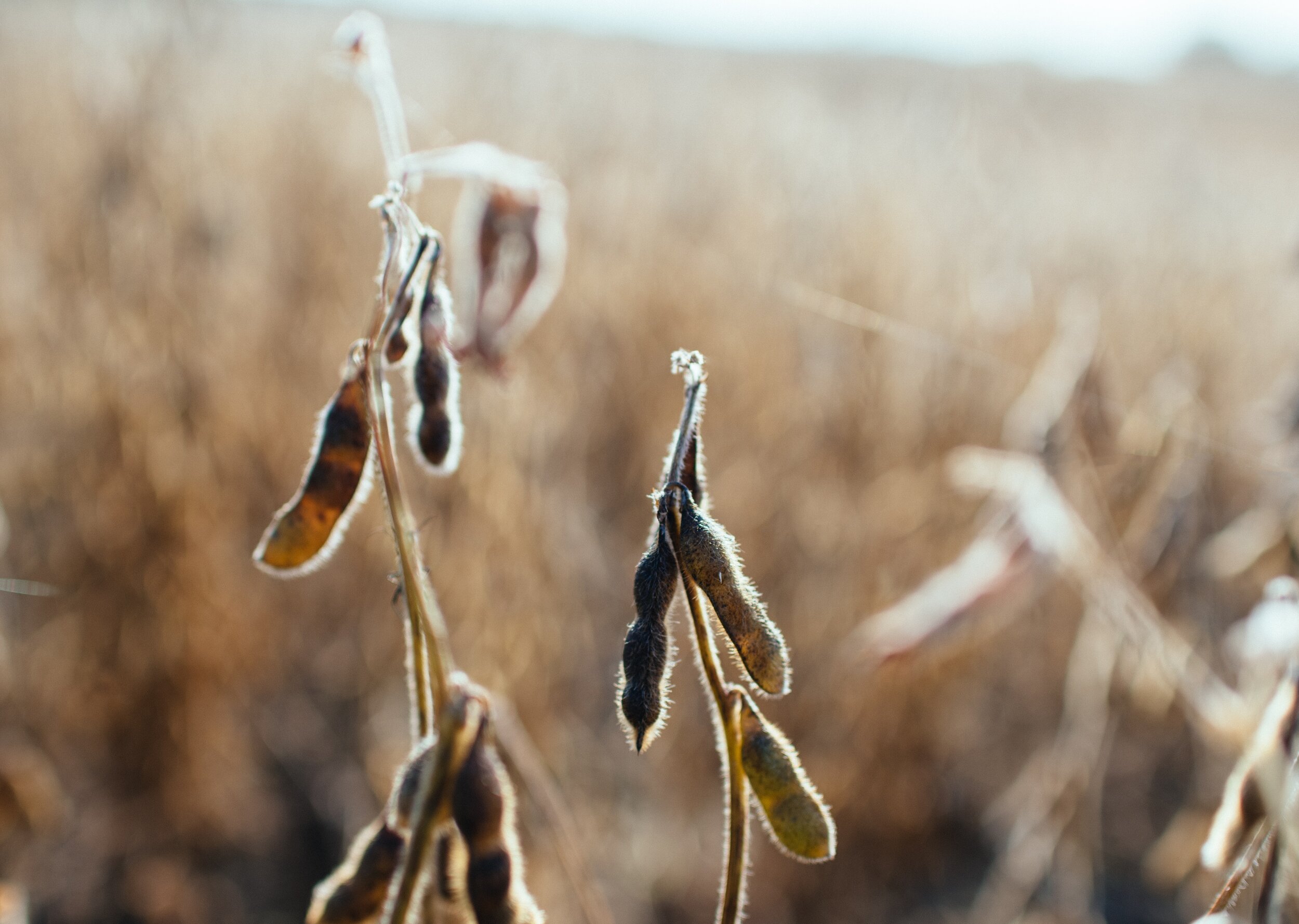
What’s the story with GMO (genetically modified) soy? It is genetically modified to withstand higher levels of glyphosate spray to combat pests. In this regard, the spray residue is of more concern than the actual genetic modification itself. Buy organic whenever possible to avoid glyphosate residue. If you can’t, still get the whole soy foods whenever possible to confer the health benefits of the fiber, isoflavones, plant based protein, etc.
Tips for Preventing Breast Cancer
Ok, you have the scoop on soy and breast cancer, but you want to know more ways to avoid breast cancer risk. Here are four tips to keep you on your path of health and longevity:
1. Exercise regularly. Exercise strengthens our immune system and helps maintain a healthy weight…two defenses against breast cancer.
2. Choose a plant centered diet filled with fiber and plant based nutrients. Plant centered diets are low in fat and high in fiber…a winning combination for reducing breast cancer risk.
3. Maintain a healthy weight. Carrying extra weight is a risk factor for metabolic syndrome which further increases cancer risk.
4. Limit alcohol consumption. Alcohol is implicated in DNA damage and increase in estrogen levels…two aspects of breast cancer risk.
References:
1. Shu XO, Zheng Y, Cai H, et al. Soy food intake and breast cancer survival. JAMA. 2009;302(22):2437‐2443. doi:10.1001/jama.2009.1783
2. Baglia ML, Zheng W, Li H, et. al. The association of soy food consumption with the risk of subtype of breast cancers defined by hormone receptor and HER2 status. International Journal of Cancer. 2016; https://doi.org/10.1002/ijc.30117
3. Zhang FF, Haslam DE, Terry MB, et al. Dietary isoflavone intake and all‐cause mortality in breast cancer survivors: The Breast Cancer Family Registry. American Cancer Society Journals. 2017; v123 (11):2070-2079. https://doi.org/10.1002/cncr.30615
4. Lise Aksglaede, Anders Juul, Henrik Leffers, Niels E. Skakkebæk, Anna-Maria Andersson, The sensitivity of the child to sex steroids: possible impact of exogenous estrogens, Human Reproduction Update, Volume 12, Issue 4, July/August 2006, Pages 341–349, https://doi.org/10.1093/humupd/dml018
5. Barnard, N. (2006, March 2). No Debate: Soy is Beneficial to Health. Physicians Committee for Responsible Medicine. https://www.pcrm.org/news/blog/no-debate-soy-beneficial-health