
I don’t know your story…chances are if you are over 40 it may sound a bit like mine. Around my 47th birthday, I felt like the wheels started falling off of the cart physically, emotionally and mentally. I felt depressed, lacked motivation, experienced brain fog, was riding a rollercoaster of emotions, developed tinnitus, noticed a softening in my middle and just didn’t feel like myself.
This was hard for me to swallow as a lifelong athlete, plant based eater and overall wellness junkie. I thought, “Why is this happening to me? I do everything right.”
At the same time I was laid up with three broken ribs (thanks pneumonia) and dove into research on how to accelerate my healing. That deep dive sent me down a rabbit hole- and I realized my symptoms, aside from the broken ribs, aligned with perimenopause.
The perimenopausal hormone shifts- fluctuating estrogen, changes in cortisol, insulin resistance, declining progesterone- were affecting my body and my mind. I’ve included a visual below showing common perimenopause symptoms, and if they sound familiar, know you’re not alone.
The good news is that we can boost dopamine naturally through food choices, movement, and daily rituals that provide support during this transition.

Dopamine- Why it matters in perimenopause
Dopamine is the motivation and reward neurotransmitter (aka chemical messenger), often called the feel good hormone. It is involved in various functions including motivation, movement, memory, pleasure, behavior, mood, sleep and arousal. High levels of dopamine equate to feelings of happiness, motivation and focus; whereas low levels cause fatigue, lack of motivation and concentration, sadness, memory loss, sleep problems, mood swings and low libido. Read that again and compare the low dopamine symptoms to those of perimenopause above. You’ll notice quite a bit of overlap. So dopamine and perimenopause, what’s the connection?
Estrogen.
Estrogen, the sex hormone most prevalent in females, plays a role in the regulation of dopamine. A hallmark of perimenopause is fluctuating estrogen followed by its eventual decline. Therefore, as estrogen declines the body becomes less efficient in the production of dopamine, and dopamine receptors become less responsive. You know that feeling right before your period, when you feel moody and blah? This is the natural point in a normal, healthy, childbearing age cycle when estrogen drops. In perimenopause, dopamine becomes lower throughout the entire cycle leading to not just the few days before period blahs…but the everyday blahs. Insert crying emoji.
I’m craving a dopamine boost right about now. My goal is to show you how to boost dopamine naturally during perimenopause instead of jumping straight to meds (which, hey- they still may be needed!). But first, let’s explore how food, new habits and routine just may do the trick as I’ve personally experienced.
Foods that help boost dopamine naturally
I’m a dietitian so naturally I’m going to start off with foods that support or boost dopamine naturally. Food is after all, nature’s pharmacy.
Tyrosine-rich foods
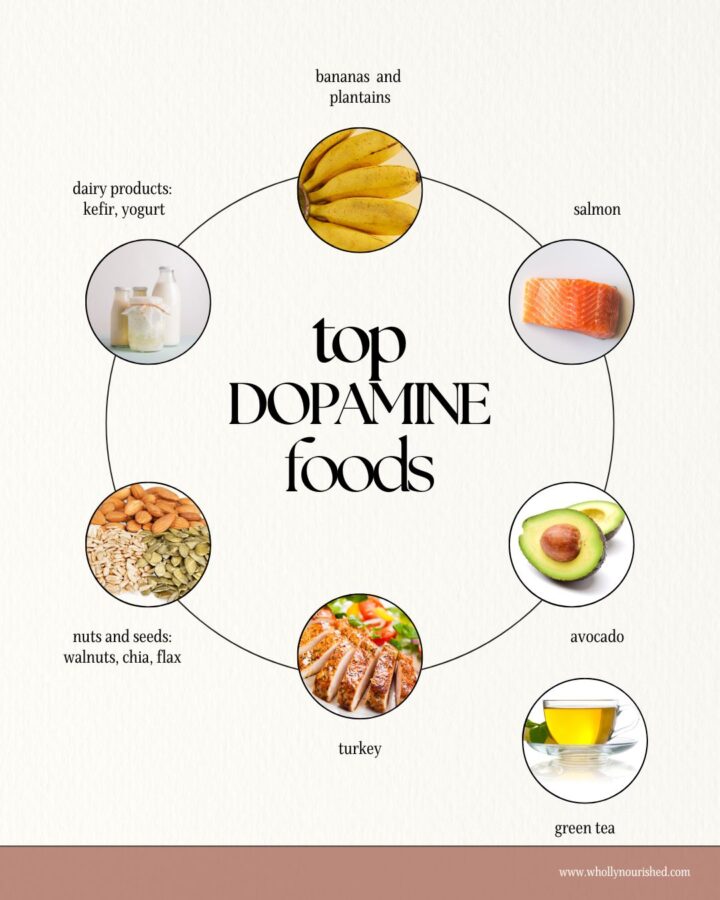
First, foods rich in tyrosine may increase dopamine. Why? Because tyrosine is a precursor to dopamine. Tyrosine-rich foods include bananas, plantains,avocado, pumpkin seeds, apples, dairy products and protein rich foods such as turkey and eggs.
Prebiotic and probiotic foods
Interestingly, gut bacteria have been shown to contribute to the production of neurotransmitters. Specifically Bacillus and Serratia species play a role in producing dopamine in the intetines. (1, 2, 3). Additionally, other types of bacteria- Prevotella, Bacteroides, Lactobacillus, Bifidobacterium, Clostridium, Enterococcus, and Ruminococcus – are involved in pathways involving dopamine.(4) Overall adopting a plant forward diet containing prebiotic foods as well as fermented foods that feed the gut microbiome benefits the central nervous system and enhances cognitive and emotional functioning. Dopamine foods to consider here include probiotic-rich yogurt, kefir, kombucha and kimchi and prebiotic rich foods like whole grains (oats, brown rice), fruits and vegetables (apples, onions, greens, broccoli), beans and nuts.
Omega-3 Fats and dopamine
Low levels of omega-3 fatty acids in the brain affect brain dopamine systems as observed in depression. Therefore, adding omega-3 foods to the diet may have a positive effect on dopamine.(4) These foods include seeds (flax, chia, hemp), walnuts, and fatty fish (salmon, tuna, anchovies, mackerel).
Green tea and dopamine
Add green tea to the list as a beverage capable of boosting dopamine. Green tea contains L-theanine which can increase dopamine levels.
Lifestyle hacks to boost dopamine naturally
Not only is dopamine affected by diet, lifestyle factors also play an important role in the release of dopamine. Reward related activities produce dopamine, thus why it is called the feel good hormone. Major dopamine producing activities include eating certain foods, sex, social interaction and certain substance use.6 This is a very limited list and there exists an array, a menu if you will, of routines and habits that boost dopamine naturally. I dug into the literature and found the following practices to be proof of this concept:
- Listening to music7 – case in point, your favorite tunes come on and you can’t help but smile, move your body, belt out the lyrics or all of the above.
- Exercise 8,9 – runners high, post HIIT euphoria, feel good walks…exercise is shown time and again to stimulate dopamine pathways.
- Sunlight exposure10 – A dose of sunlight can instantly perk you up, especially in the middle of winter following a grey day streak. Sunlight exposure increases the availability of dopamine receptors and therefore the brain can make better use of dopamine making you feel better and more motivated.
- Adequate sleep/naps11 – Dopamine levels are diminished with lack of sleep, whereas adequate sleep restores dopamine. Reasonable naps, around 30 minutes, may also help restore dopamine.
Just a few other pursuits that increase dopamine include learning something new, being in nature, creative endeavors, and activities that promote relaxation. Read on for more specifics and how to curate your own dopamine menu to boost dopamine naturally.
What is a Dopamine Menu and how can it help?
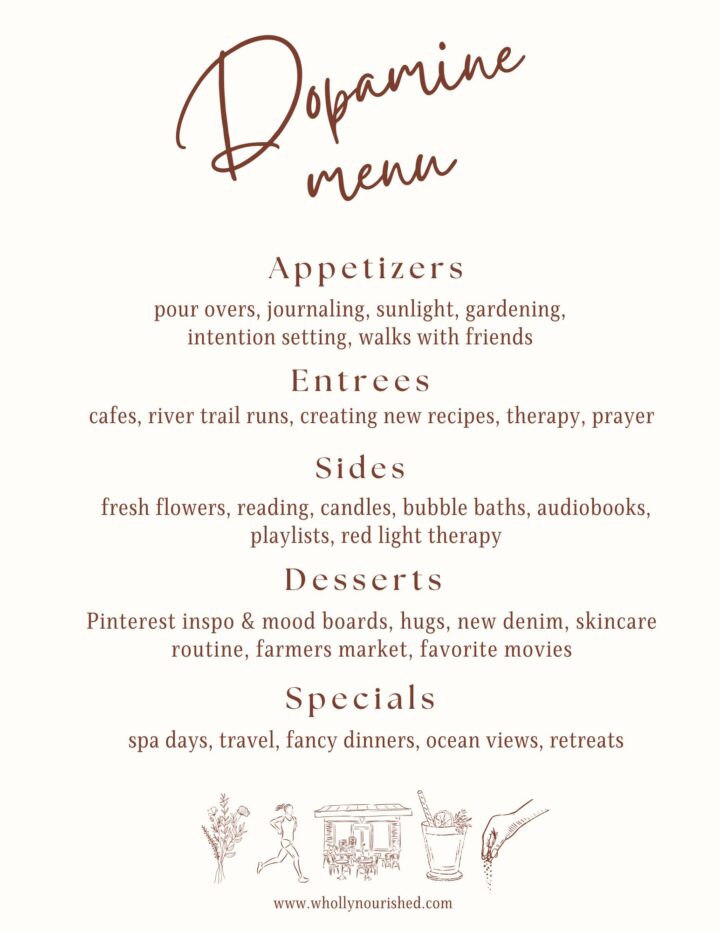
The dopamine menu is trending, and while often wary of trends, this is one I stand behind and find that it is a fun and useful wellness tool in the mental struggles of perimenopause. The dopamine menu concept was introduced by Jessica McCabe, author of How to ADHD: An Insider’s Guide to Working With Your Brain (Not Against It). The menu is a personalized list of activities in which you find joy or pleasure. Healthy activities that lift you out of a funk, inspire motivation, improve focus and generally chase away the blahs.
The dopamine menu is split into categories just as you would find on a restaurant menu – appetizers, mains, sides, desserts and specials, and it breaks down as follows:
Appetizers
Similar to a food menu, dopamine appetizers are small joys or bite-sized rituals that warm up your mood for the day. Examples include morning sunlight, journaling, stretching, a walk and sipping a favorite morning beverage.
Entrees
These are the habits that fill your soul. They may take a bit of time, but they have a big payoff. Examples include cooking a nourishing meal, going to therapy, meditating, prayer and spending time in nature.
Sides
Sides are like vibe setters. The extras that make your nervous system go “ahhhhh”. Examples include playlists, candles, bubble baths, essential oils and opening windows to let the fresh air in.
Desserts
Dopamine desserts are like your favorite mouth watering, decadent dessert …they both bring you pure joy. Examples include slow mornings, snuggles, watching a sunrise or a sunset and movie marathons.
Specials
The specials are the real indulgences of the menu. They may require an investment but they are worth it. Examples include spa days, fancy dinners, girls’ trips, cabin weekends and beach getaways.

How this ties into dopamine and perimenopause
We’ve already established that estrogen helps regulate dopamine. As estrogen fluctuates and eventually declines during perimenopause, dopamine production is disrupted- leaving women feeling foggy, unmotivated and flat.
We have the tools right at our fingertips to start boosting dopamine naturally everyday through intentional food choices, lifestyle habits and routines. Taking the time to jot down your own dopamine menu is an empowering way to offset your shifting hormones in a proactive way.

Key Takeaways
- Estrogen decline during perimenopause disrupts dopamine production resulting in fatigue, low mood and brain fog
- You can boost dopamine naturally through certain foods, specifically those rich in tyrosine, omega-3’s, probiotics and prebiotics
- Daily habits and routines, i.e. morning sunlight, journaling, movement, and adequate sleep support healthy dopamine pathways
- A dopamine menu can be a powerful tool to manage perimenopausal shifts so you can reclaim joy and energy
Start by creating your own dopamine menu- it’s one small step that can bring joy and energy back. Download your free printable here.