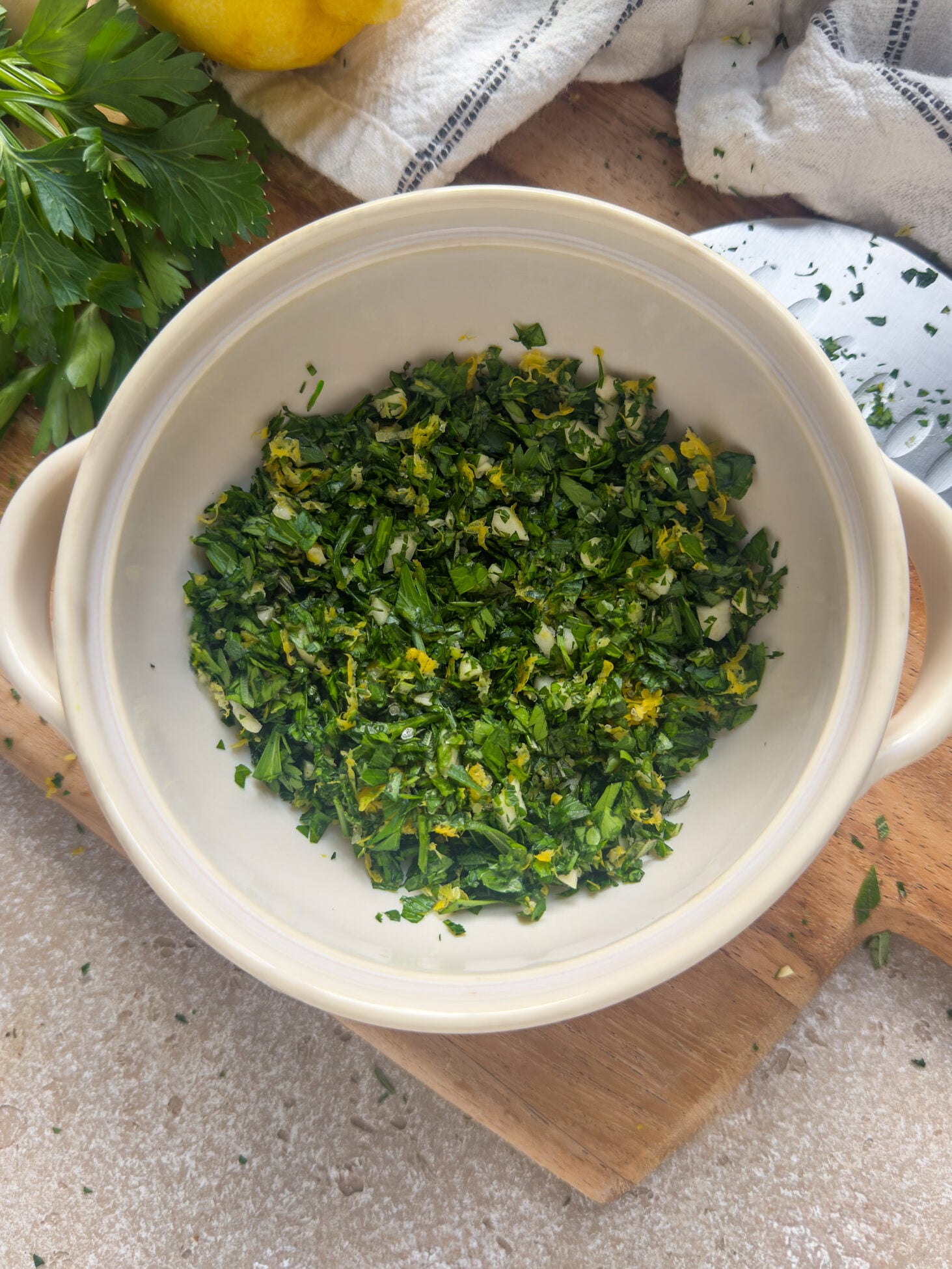
Bright, fresh and full of flavor, this easy homemade gremolata combines parsley, rosemary, garlic and lemon zest. A simple finishing touch for roasted veggies, soup, pasta and more!
A little fresh flavor can go a long way in the kitchen. This easy homemade gremolata is a bright, herby condiment made with fresh parsley, rosemary, garlic and lemon zest. It takes just minutes to prepare and adds a fresh pop of flavor to roasted vegetables, soups, potatoes, pasta and so much more.
Think of it as an easy way to take everyday dishes from good to something a little more special.
What Is Gremolata?
Gremolata is a traditional Italian herb condiment typically made with fresh parsley, garlic, and lemon zest. It’s known for its bright, fresh flavor and is often used as a finishing touch for dishes like osso buco.
This version puts a little twist on the classic by incorporating fresh rosemary alongside the parsley. Rosemary adds an earthy, aromatic flavor that pairs especially well with roasted vegetables, potatoes and cozy soups.
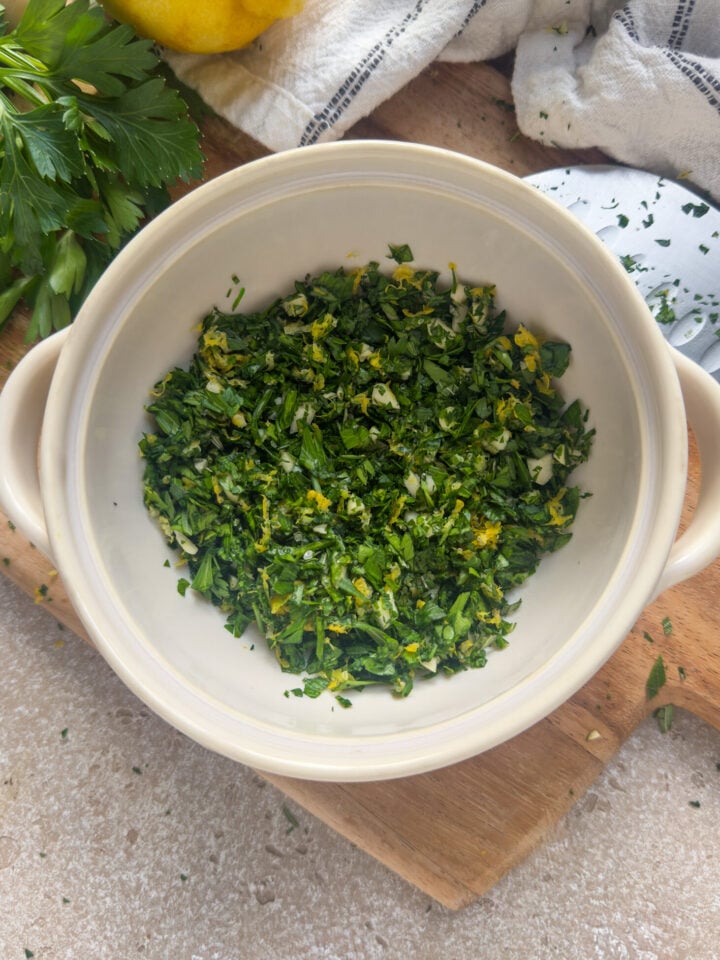
Unlike a sauce or pesto, gremolata is traditionally a dry, finely chopped mixture of fresh ingredients. It’s meant to be sprinkled or spooned over a finished dish just before serving. It is worth noting that some variations include olive oil, creating a wetter, more spoonable condiment that does in fact resemble a pesto or chimichurri.
Why You’ll Love This Gremolata
Quick and easy: It takes about 10 minutes to prepare with just a handful of fresh ingredients.
Big flavor: Fresh herbs, garlic, and lemon zest bring brightness to everyday meals.
Versatile: Use it on roasted vegetables, soups, potatoes, pasta and more.
A simple way to add freshness: A little goes a long way when it comes to adding flavor to a finished dish.
Ingredients You’ll Need
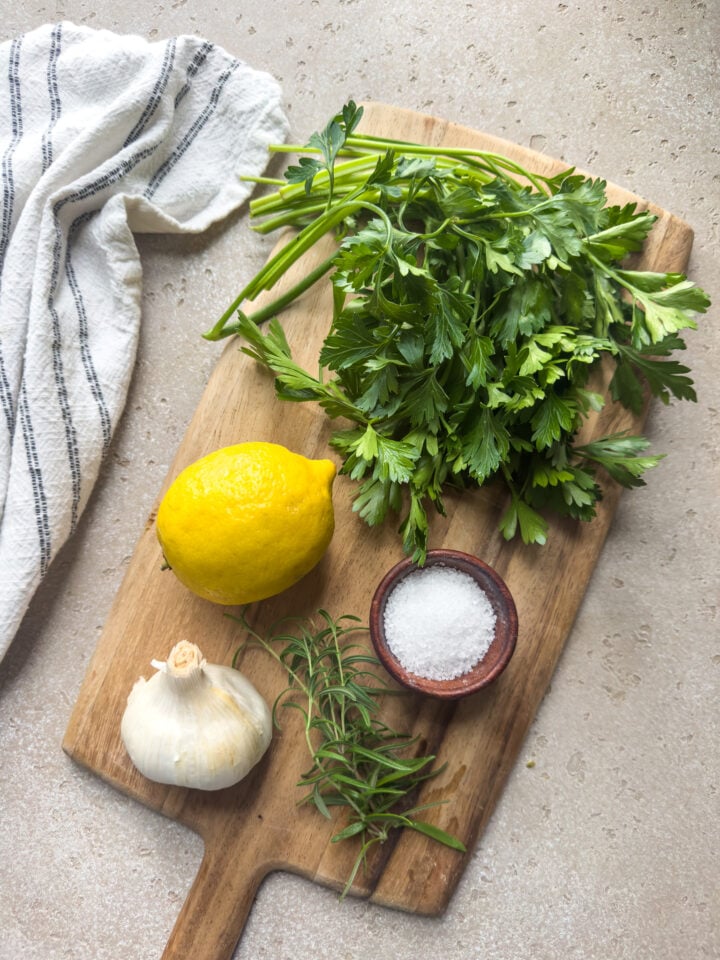
You only need five simple ingredients to make this fresh herb gremolata.
Fresh parsley: The main herb and foundation of the recipe. Flat-leaf Italian parsley works particularly well.
Fresh rosemary: Adds an earthy, aromatic note that makes this version a little different from traditional gremolata.
Lemon zest: Brightens the mixture and balances the savory flavors. Use the zest of one lemon.
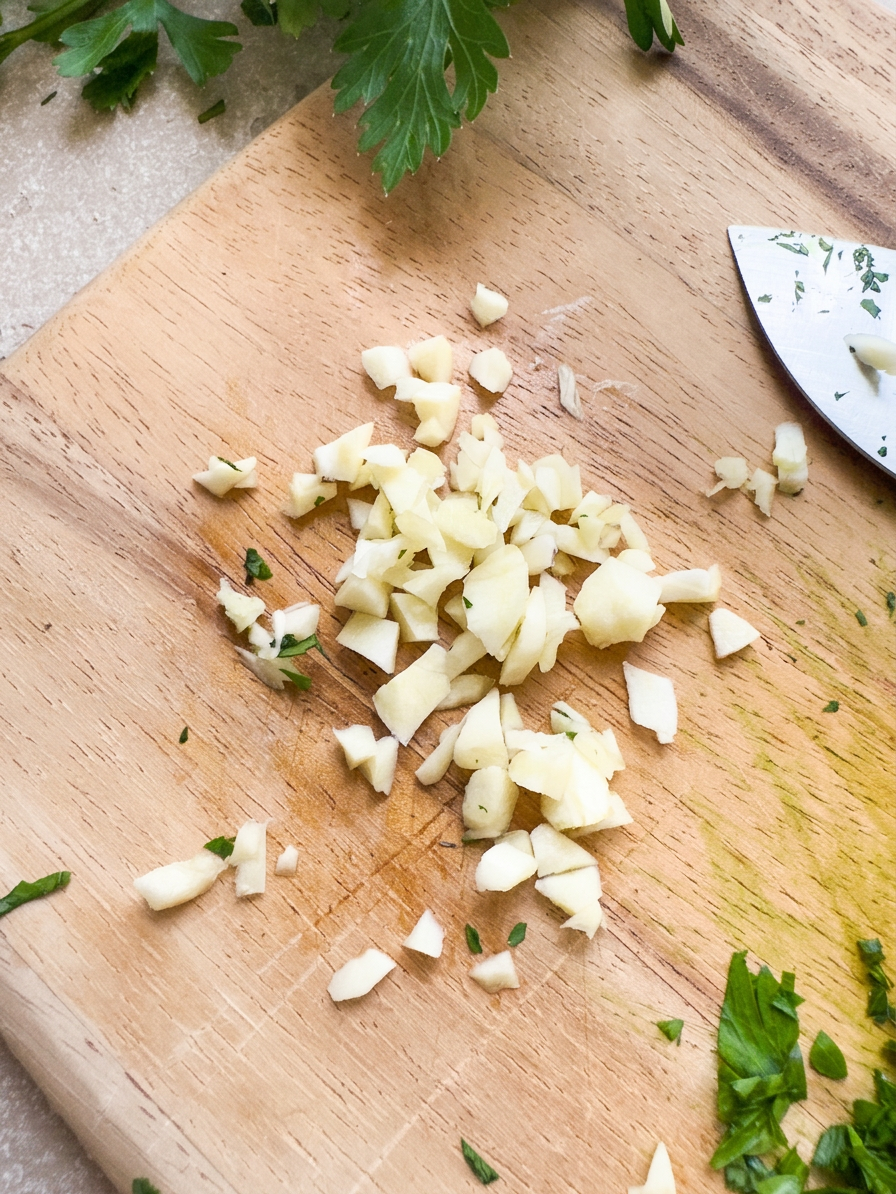
Garlic: Fresh minced garlic adds bite.
Kosher salt: Enhances the flavors and brings everything together.
How to Make Homemade Gremolata
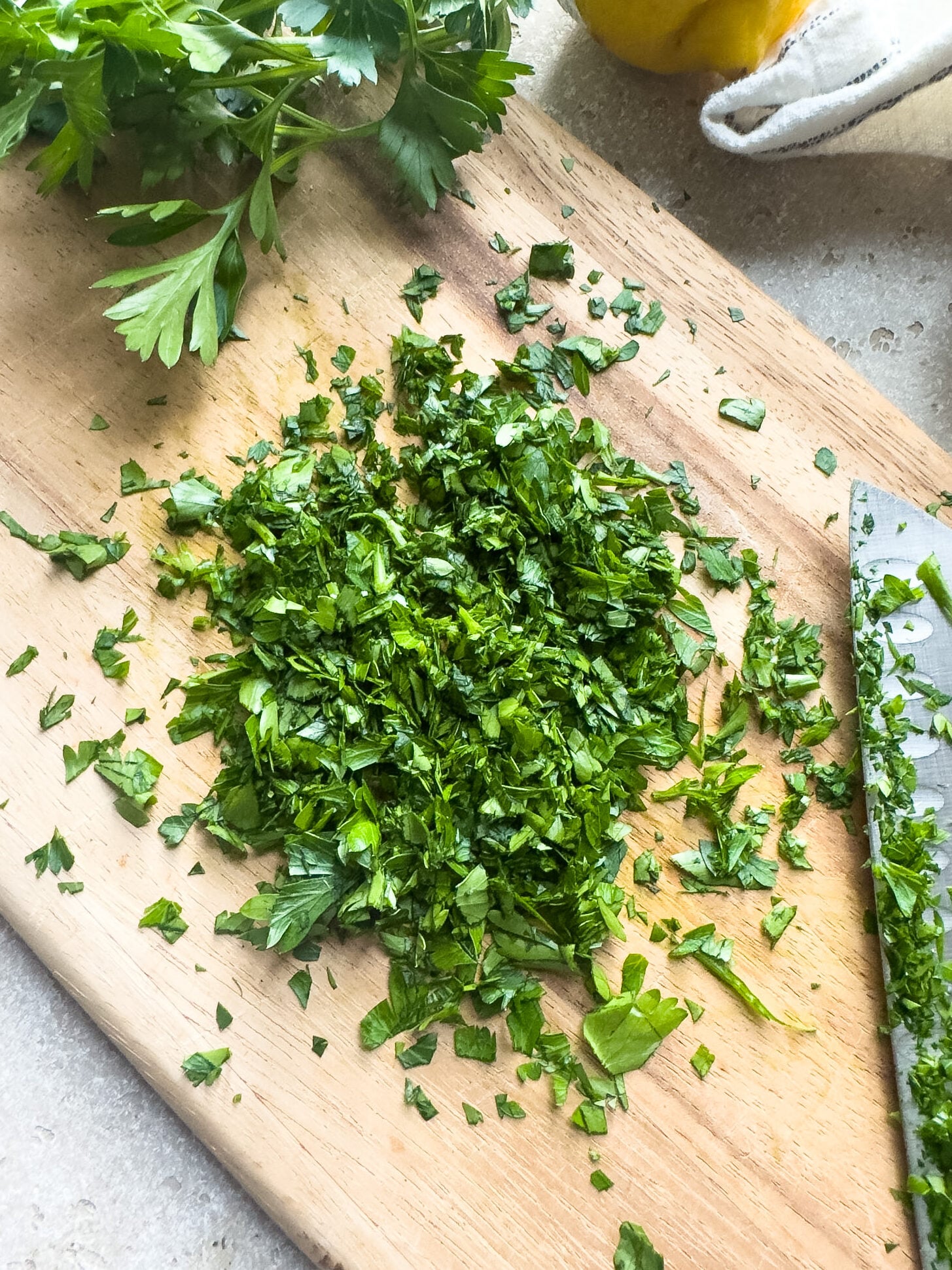
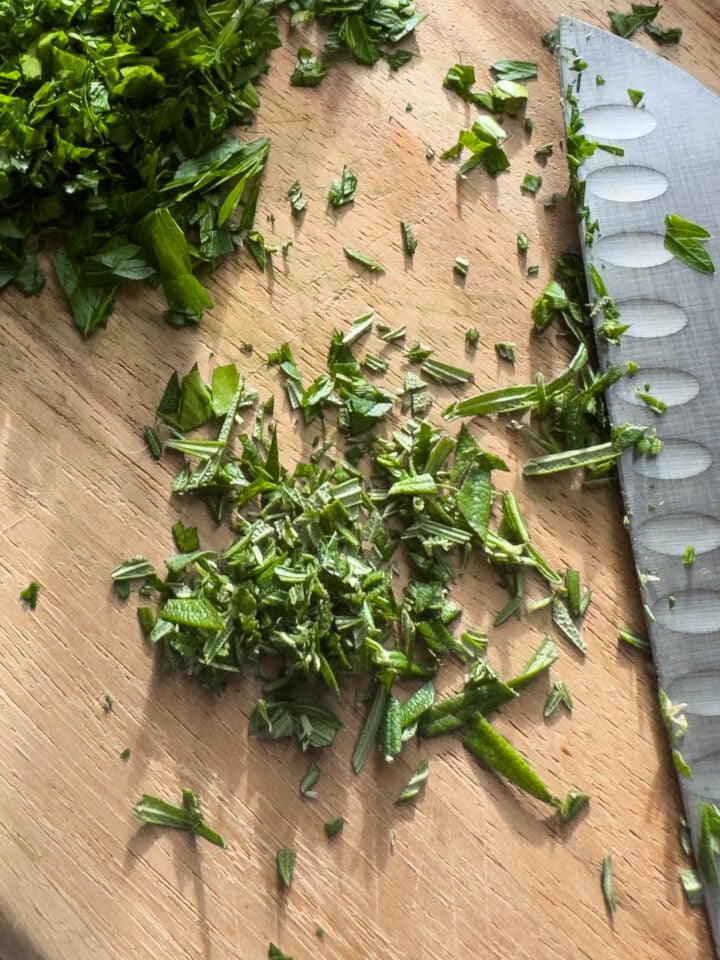
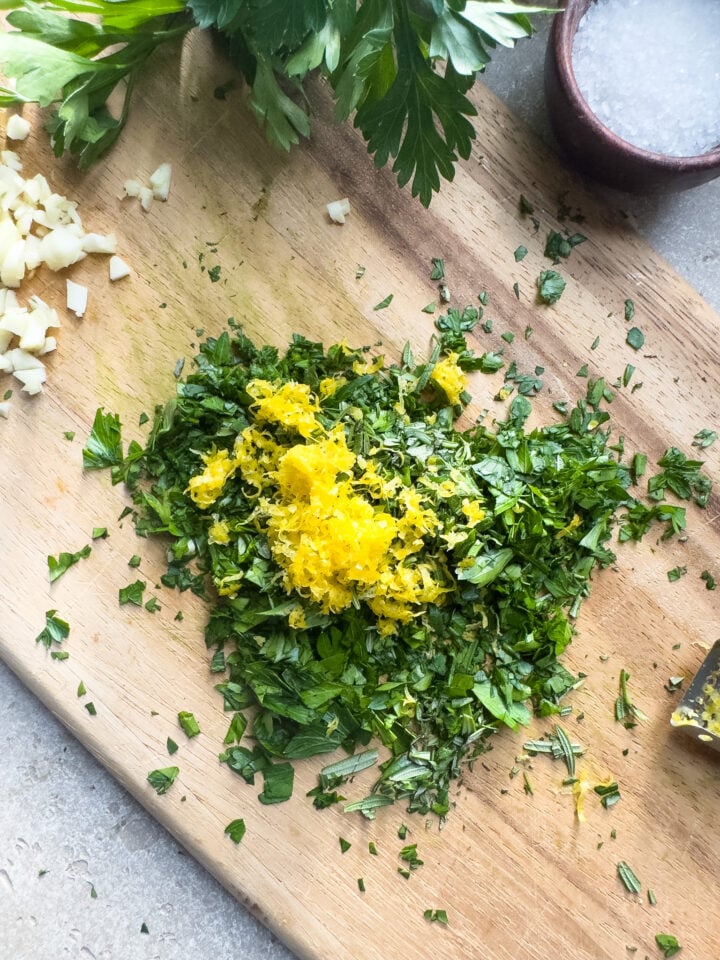
Chop the herbs. Finely chop the fresh parsley and rosemary and add them to a small bowl.
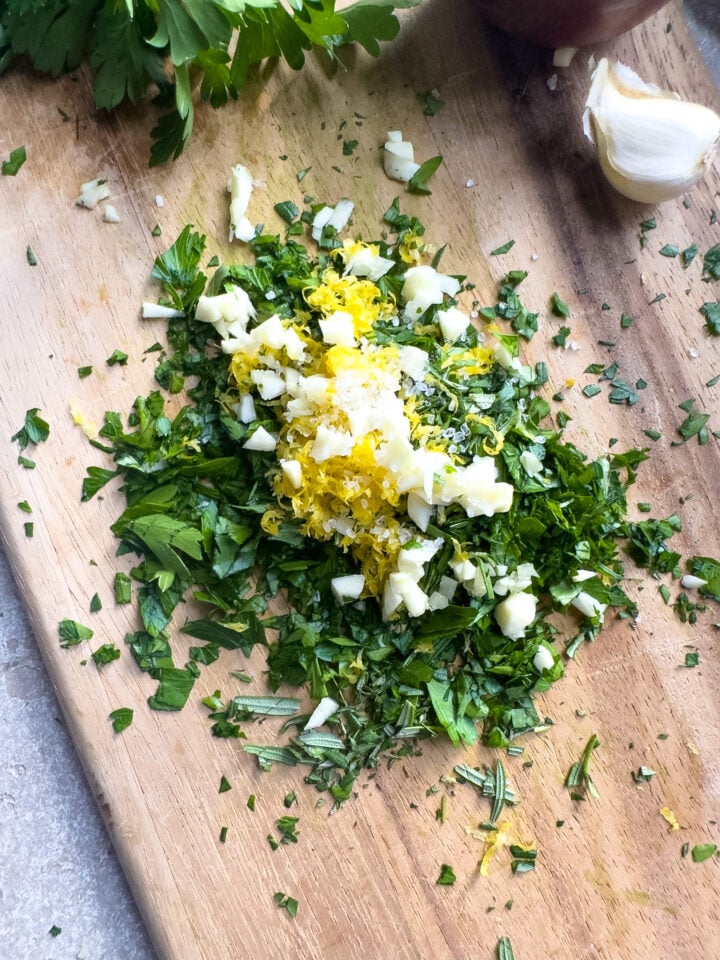
Add the aromatics. Stir in the lemon zest and minced garlic.
Season. Add ¼ teaspoon kosher salt and mix to combine. Taste and add more salt if desired.
Serve. Sprinkle over your favorite finished dishes just before serving.
That’s it! A fresh, flavorful condiment in about 10 minutes.
Ways to Use Gremolata
One of my favorite things about gremolata is how easily it can elevate simple dishes. The fresh herbs and lemon zest add brightness, while the garlic gives it a savory finish.
Here are a few ways to use it:
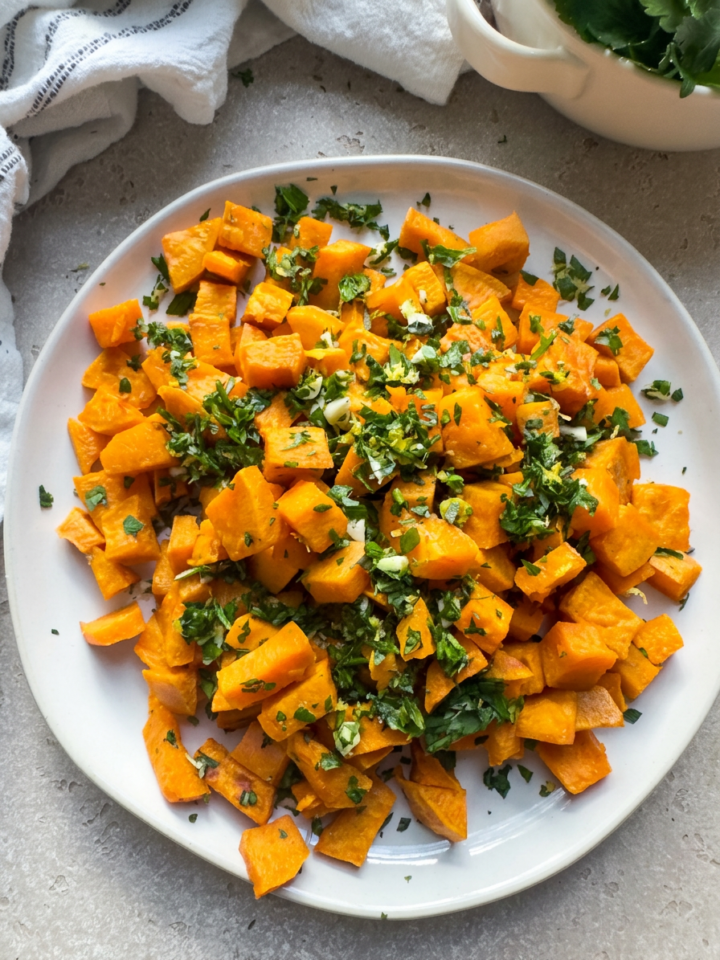
Roasted vegetables: Sprinkle over roasted cauliflower, butternut squash, carrots or sweet potatoes just before serving. See my recipe for roasted cauliflower steaks with gremolata.
Potatoes: Add it to baked or roasted potatoes for brightness.
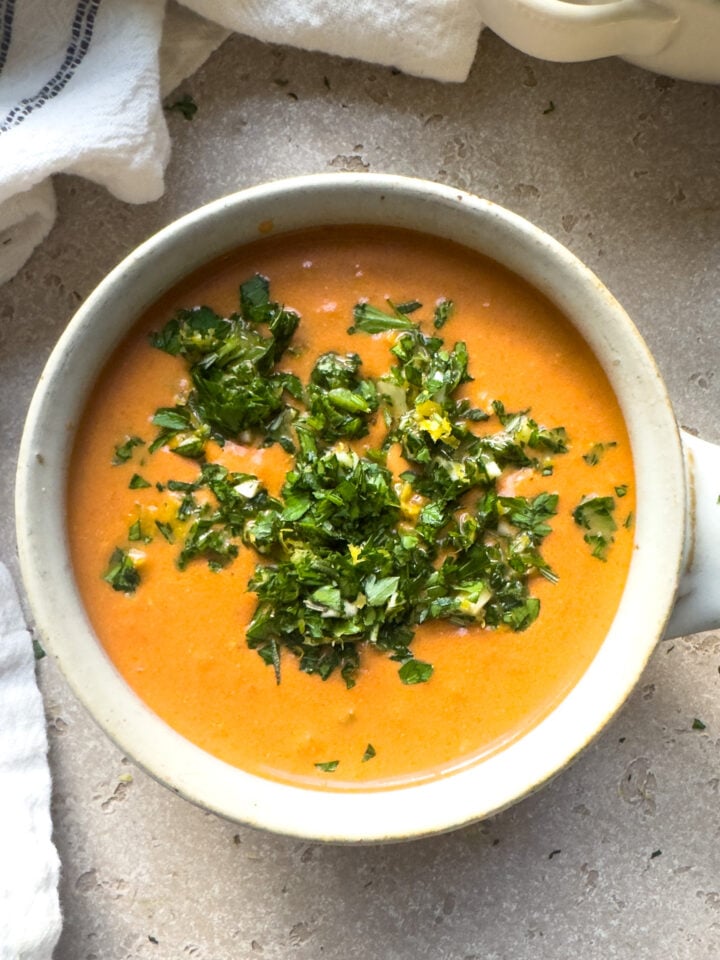
Soups: Finish tomato soup, minestrone or a white bean soup with a spoonful of gremolata. I love how it brightens my tortellini and lasagna soups.
Pasta and gnocchi: Sprinkle it over a warm pasta dish. It is especially delicious on this sun dried tomato gnocchi.
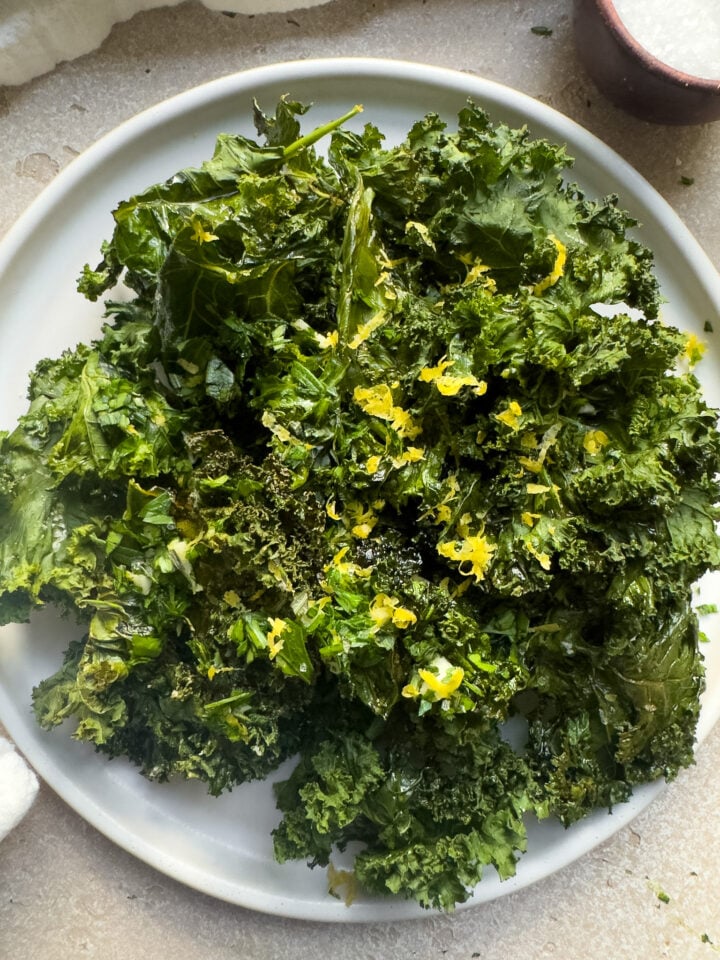
Crispy greens: Add a few pinches to homemade kale chips for a fresh, savory finish.
Tips for the Best Gremolata
Use fresh herbs. Fresh parsley and rosemary are essential for the bright flavor and texture of gremolata.
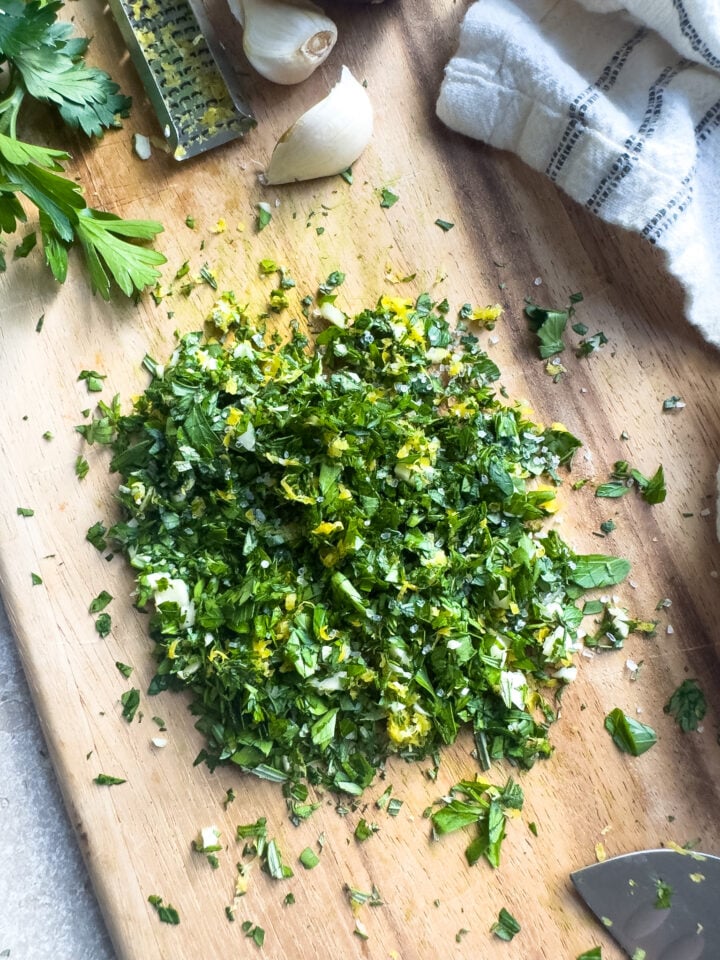
Chop finely. Finely chopping the ingredients helps distribute the flavors evenly.
Zest. You’ll only need the lemon zest for this recipe, not the juice.
Add it at the end. Gremolata is best used as a finishing condiment rather than cooked into a dish.
Adjust the seasoning. Start with ¼ teaspoon of kosher salt and add more to taste.
How to Store Gremolata
Gremolata is best enjoyed fresh, when the herbs are at their brightest. If you have leftovers, store them in an airtight container in the refrigerator for up to 3 days. The herbs may soften and the garlic flavor may become more pronounced as it sits.
Frequently Asked Questions
Is gremolata the same as pesto?
No. Gremolata is a fresh, finely chopped mixture of herbs, garlic, and lemon zest. Pesto is typically blended with ingredients like olive oil, nuts, cheese, and herbs to create a thicker sauce.
Can I make gremolata ahead of time?
You can prepare it a few hours ahead and refrigerate it in an airtight container. For the freshest flavor, it’s best made close to serving.
Can I use dried herbs?
Fresh herbs are best for gremolata. Dried parsley and rosemary won’t provide the same fresh flavor or texture.
What does gremolata taste like?
Gremolata is fresh, bright, savory and slightly pungent from the garlic. The lemon zest adds a citrusy note while the rosemary gives this version an earthy, aromatic flavor.
A Fresh Finish for Everyday Meals
Sometimes it’s the simplest additions that make a meal feel a little more special. Keep this easy homemade gremolata in mind the next time you’re roasting vegetables, making soup or putting together a simple pasta dinner. It’s a small step that adds a lot of fresh flavor.
Easy Homemade Gremolata
This easy homemade gremolata recipe combines fresh parsley, rosemary, garlic and lemon zest for a bright, flavorful topping for a variety of dishes.
Add the parsley and rosemary to a cutting board and finely chop.
Sprinkle the lemon zest, minced garlic, and ¼ teaspoon kosher salt over the herbs. Continue chopping, using your knife to chop and incorporate the ingredients until everything is finely minced and evenly distributed.
Taste and add additional salt as desired.
Transfer to a small bowl or sprinkle directly over roasted vegetables, potatoes, soups, pasta or your favorite dish just before serving.
Meet Jaime
I’m a registered dietitian who’s obsessed with all things food! From growing to recipe development, my life is centred around food and how it can nourish us from the inside out.